
Research, Reactions & the Laws of the Universe 🔬✨

Our classroom has been the best kind of busy for the past couple of weeks! Our Lower Elementary students are settling deeply into their individual academic paths, and it has been exciting to watch their confidence, independence, and stamina grow as our work cycles take shape.
An impressive number of children have already completed their first research project of the year! One of the joys of Montessori research is that children's curiosity helps lead the way, so we've all learned something new as classmates have shared presentations about everything from dinosaurs, ducks, turtles, and jellyfish to Harry Potter and tornadoes. Research gives children practice with reading, writing, organizing information, following an interest over time, and eventually, standing in front of a community and teaching someone else what they've discovered.
Alongside their independent work, we've been studying the external parts of vertebrates, looking closely at fish, amphibians, reptiles, birds, and mammals. And throughout the room there has been LOTS of math, reading, writing, spelling, and individualized lessons as children continue moving forward at their own pace.
And when the work is done? Something pretty wonderful has been happening.
During the time in our week when children are free to choose their own activities and collaborate with one another, what began earlier this year as small groups doing puzzles, drawing pictures, and making little creations together has evolved into an almost classroom-wide enterprise: a miniature Davidson! Nearly every child has eagerly opened a shopfront somewhere in the classroom, creating paper wares to sell, deciding what their business will offer, making signs, business cards, and merchandise, and buying and trading with their classmates. Naturally, a town full of businesses needed an economy, so the children have designed their own classroom currency and credit cards, too.
What looks like play is also a wonderful glimpse of the Elementary child at work socially: organizing, negotiating, inventing, problem-solving, communicating, collaborating, and building something increasingly elaborate from a shared idea. No adult assigned the project or planned where it would go next. The children simply had time, freedom, one another, and an idea worth pursuing—and “Mini Davidson” grew from there. We can't wait to see what businesses open next!
But perhaps the biggest excitement this week has been science!
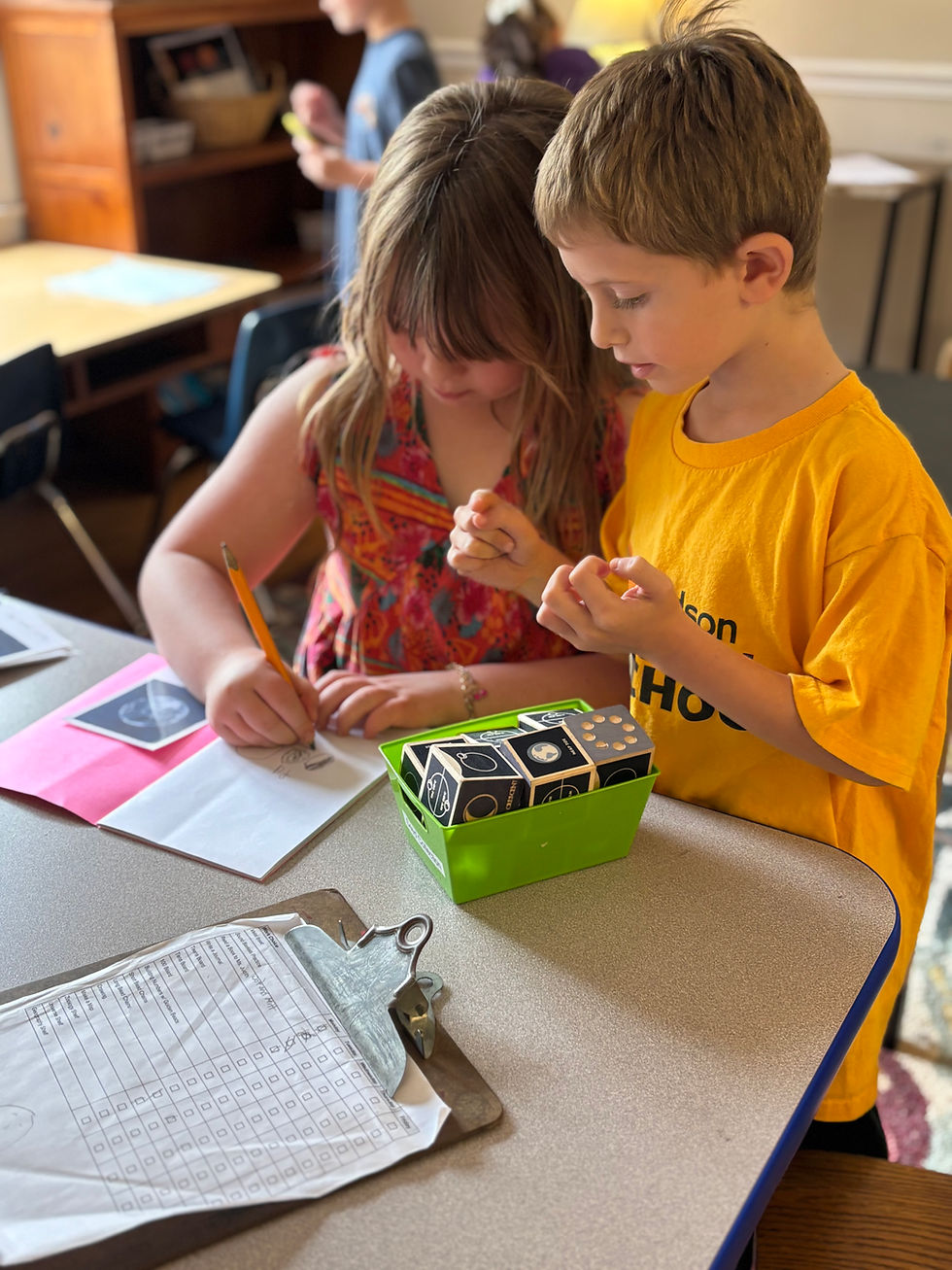
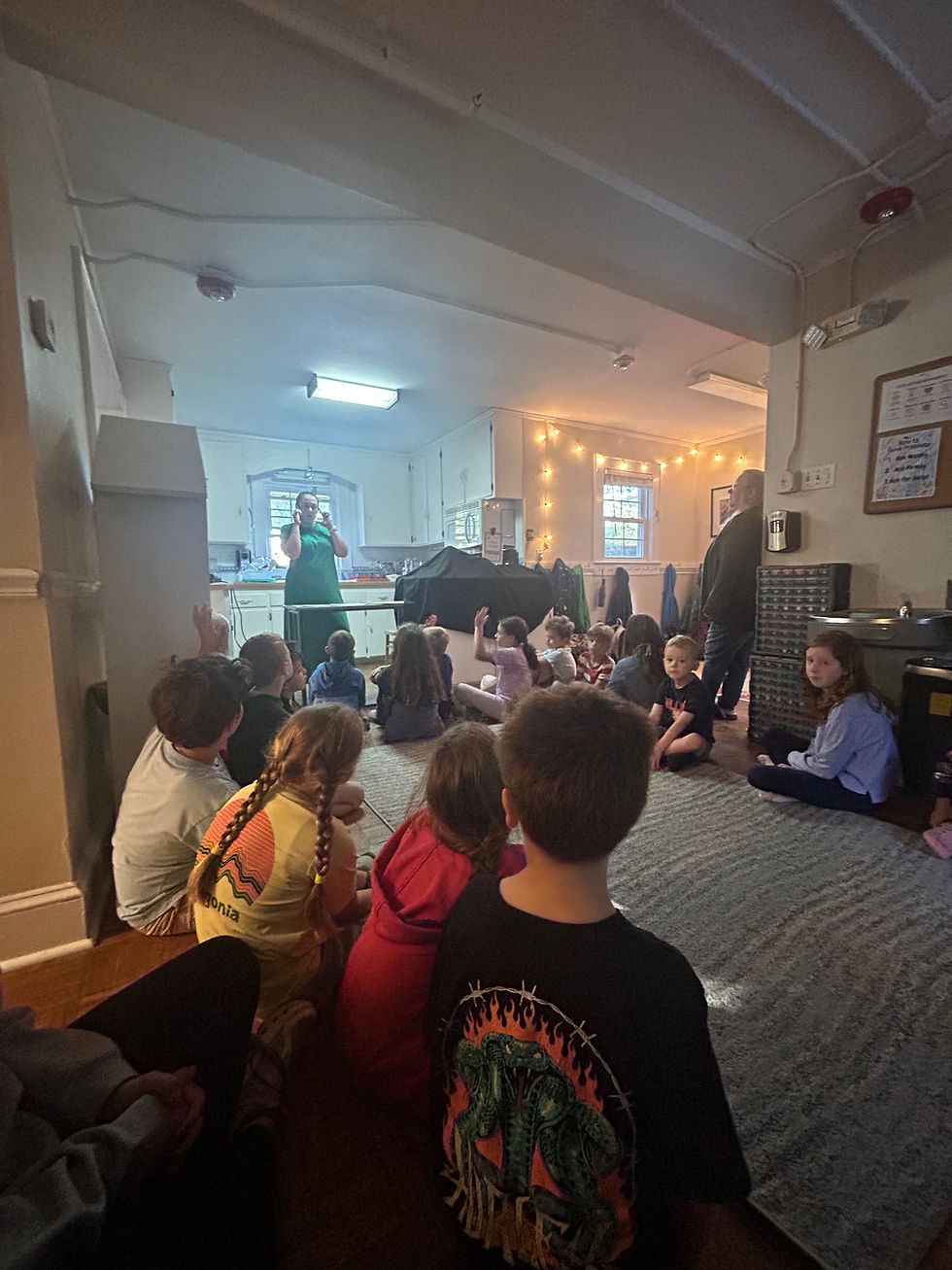
We've begun experimenting, along with Upper Elementary, with what we sometimes call the “laws of the universe” — those predictable ways the physical world behaves that children encounter every day but may never have stopped to investigate. What makes something a solid, liquid, or gas? Can matter change from one state to another? What happens to a piece of ice as its conditions change? What exactly makes something a mixture? And, very importantly: Can we grow crystals?!
These experiments are our first steps into the enormous worlds of physics and chemistry, but they're also exercises in an even more fundamental skill: learning how to think like a scientist.
We make a prediction. We try something. We observe carefully. We take notes. We ask why. We wonder what might happen if we change one thing. Sometimes our experiment works exactly as expected, and sometimes it absolutely does not! (And that's valuable information, too!)
That spirit of trial, error, observation, documentation, and wondering is something we hope the children carry far beyond any particular science lesson. After all, curiosity isn't simply about finding answers. It's about becoming comfortable enough with the unknown to keep asking better questions. I’m so excited to discover where our questions will take us next. 🔬🧊💎🌎
Comments